
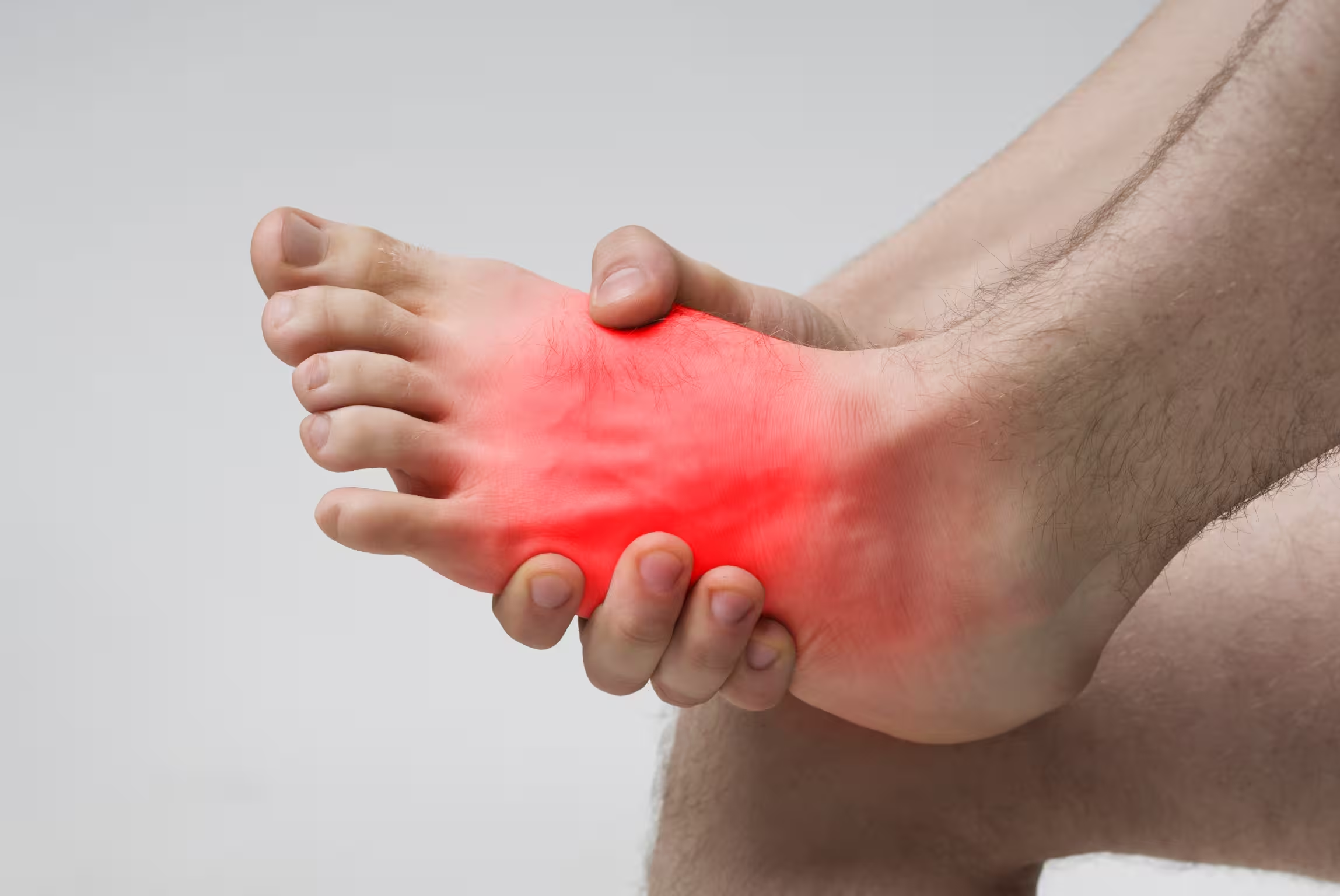
A sudden ache on the top of the foot can be confusing, especially when there was no obvious injury. Many people describe waking up one morning, taking a few steps, and noticing sharp or uncomfortable pain in the top of the foot that was not present the day before.
Patients visiting Dr. Guillermo Sanchez in Dubai often ask the same question: Why does the top of my foot hurt all of a sudden? Although the pain may feel alarming, it is usually linked to irritation or inflammation of the tissues that run along the upper part of the foot.
The top of the foot contains delicate structures, including tendons, nerves, bones, and small joints. When any of these become stressed, compressed, or inflamed, discomfort can appear quite quickly.
Understanding the possible causes can help you recognize when the problem may resolve with rest and when it may require medical attention.
Before exploring the causes, it helps to understand what the top of the foot is called anatomically.
The upper surface of the foot is known as the dorsum of the foot. Though it looks simple, this region plays a vital role in supporting normal movement.
These include:
Because this area has minimal soft tissue protection, it can easily become irritated from pressure, repetitive motion, or injury. When patients experience pain in the top of the foot, it usually originates from one of these structures.

When someone asks, Why does the top of my foot hurt all of a sudden?, several common medical conditions are usually considered.
One of the most frequent causes is extensor tendonitis. The extensor tendons travel across the top of the foot and control toe movement. When these tendons become irritated, they can cause pain that worsens during activity.
This condition may develop due to:
People with this condition often notice the top of foot hurts when walking, especially while lifting the toes.
Stress fractures are very small cracks in the bones of the foot, most commonly affecting the metatarsals. These fractures do not always occur from a major injury. Instead, they develop gradually from repetitive stress.
Athletes, runners, and individuals who suddenly increase their physical activity are particularly at risk.
Typical symptoms include:
Orthopaedic studies suggest that stress fractures account for nearly 10% of sports-related injuries, with the foot being one of the most commonly affected areas. |
Arthritis can also affect the joints located in the middle of the foot. Over time, the cartilage in these joints may wear down, leading to inflammation and stiffness.
Patients with midfoot arthritis may notice:
Although arthritis is often associated with aging, it may also develop after previous injuries.
In many cases, the cause of pain is surprisingly simple: improper footwear.
Shoes that are too tight across the top of the foot can compress tendons and nerves. Repeated pressure can lead to inflammation, especially if the shoes are worn for long hours.
People who frequently wear rigid shoes, high heels, or tightly laced sneakers may eventually develop irritation along the dorsal foot.
Pain on the top of the foot can present in several different ways depending on the underlying cause. Some people feel mild aching discomfort, while others may notice sharp pain that worsens with movement.
Common symptoms may include:
If these symptoms persist for more than several days or worsen over time, medical evaluation is recommended.
When evaluating pain in the top of the foot, doctors begin with a careful clinical assessment.
During a consultation, Dr. Guillermo Sanchez may examine:
If a deeper injury is suspected, imaging studies may be recommended.
These may include:
Accurate diagnosis is essential because each condition requires a slightly different treatment approach.
The treatment approach depends largely on what is causing the pain in the top of the foot. In many patients, symptoms improve with conservative care.
A proper evaluation by a specialist such as Dr. Guillermo Sanchez in Dubai helps determine the most appropriate approach.
Reducing activities that put repeated pressure on the foot allows inflamed tissues to recover. Temporary rest from running, jumping, or prolonged walking can significantly improve symptoms.
Gradually returning to activity is important to prevent the pain from recurring.
In the initial stages, cold therapy helps minimize swelling and calm inflammation.
Doctors may recommend:
These measures are particularly helpful when the top of foot swollen due to tendon inflammation or soft tissue irritation.
One of the most common causes of pain in the top of the foot is pressure from poorly fitting shoes.
Treatment may involve:
Simple footwear changes often relieve discomfort when the top of foot hurts when walking.
Custom or semi-custom orthotics help redistribute pressure across the foot and improve alignment.
Orthotics may help patients who have:
Orthotics work by correcting biomechanical imbalances, and they reduce strain on tendons and joints.
Physical therapy plays a key role in the recovery process, especially in cases that include tendonitis or repetitive stress.
A therapist may guide patients through exercises that focus on:
These exercises prevent the recurrence of painful foot pain.
Surgery is rarely the first option for upper foot pain. However, it may be necessary when structural problems, fractures, or joint damage are present.
Most stress fractures heal without surgery. However, in cases where the fracture does not heal properly, surgical stabilization may be required.
This may involve:
If an extensor tendon becomes severely damaged or torn, surgical repair may be recommended.
The procedure may involve:
After surgery, rehabilitation helps restore mobility and strength.
For patients with advanced midfoot arthritis, surgical procedures may help relieve chronic pain.
One option is midfoot fusion, where damaged joints are stabilized so that the bones heal together. This reduces painful movement within the joint.
The recovery period for sudden foot pain can vary widely depending on the cause of the problem and the treatment approach used. Minor inflammation improves easily with time. But complex conditions like bone strains or injuries may require longer healing periods.
Typical recovery timelines may include:
Returning to intense activity too soon can worsen pain in the top of the foot or delay healing.
While mild discomfort may improve with rest, persistent or worsening symptoms should not be ignored. If you continue to wonder why does the top of my foot hurt all of a sudden?, a professional evaluation can help identify the exact cause and prevent complications.
Dr. Guillermo Sanchez in Dubai provides comprehensive assessment and treatment for foot and ankle conditions.
Sudden pain may occur due to tendon inflammation, repetitive strain, stress fractures, nerve irritation, or pressure from tight footwear.
Pain while walking often results from extensor tendonitis, stress fractures, or joint inflammation in the midfoot.
The upper surface of the foot is called the dorsum of the foot, which contains tendons, nerves, and blood vessels responsible for toe movement.
Swelling can be triggered by conditions like inflammation, arthritis, repeated strains and injuries, or fluid buildup in the soft tissues.
Yes. Tight footwear can compress tendons and nerves on the top of the foot, leading to irritation and discomfort.
Mild tendonitis typically improves within two to four weeks with proper care, rest, and proper footwear.