
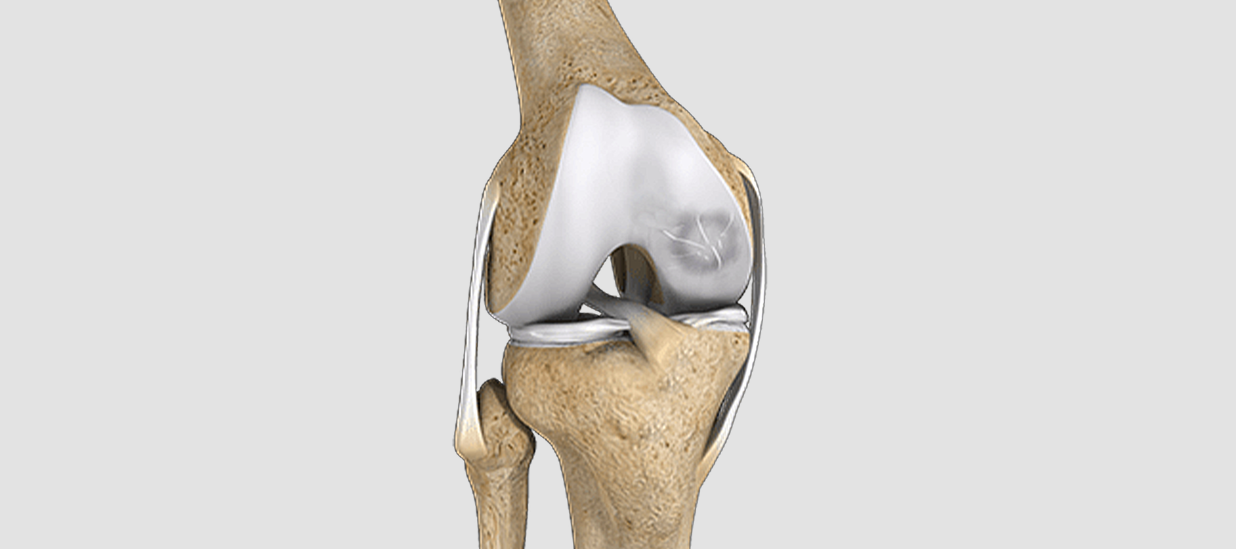
Osteochondritis dissecans of knee is a joint condition that weakens the bone beneath the cartilage, often causing pain, swelling, or even loose fragments within the joint. It is most common in children, teens, and young adults, particularly those active in sports.
With timely diagnosis and advanced treatment, full recovery is possible.
Under the care of Dr. Guillermo Sanchez, the most trusted orthopedic doctor, known for his expertise in joint preservation and minimally invasive techniques, patients receive personalized care focused on restoring mobility and long-term joint health.
Joints are designed to glide with a layer of protective cartilage. When part of the bone and cartilage separates, the surface becomes irregular.
This can make movement painful, reduce the range of motion, and compromise joint stability.
Osteochondritis dissecans of knee is a joint disorder in which a section of subchondral bone (the bone just beneath the cartilage surface) loses its blood supply.
Over time, this may cause the bone and its overlying cartilage to fragment and detach.
Although OCD can occur in several joints, the knee is by far the most common site. Other locations include:
The condition most often affects just one joint, but in familial cases, multiple joints may be involved.
Two main types of OCD are recognized:
This common procedure replaces both sides of the knee joint with durable artificial implants. It’s ideal for patients with severe arthritis or extensive damage.
It can affect multiple joints and is often associated with shorter stature and early-onset osteoarthritis.
A rare, inherited form caused by a mutation in the ACAN gene, which encodes the aggrecan protein, a crucial component of cartilage that plays a significant role in skeletal development and joint function.
The precise cause of OCD is still being studied. Factors that are believed to play a role include:
Running, jumping, or throwing can place repeated stress on a joint. Over time, these stresses may disrupt the blood flow to a small area of bone.
In familial OCD, a genetic mutation impairs cartilage structure and resilience.
The fundamental mechanism is a localized lack of circulation in the bone beneath the cartilage.
Anyone can develop OCD, but certain groups are more likely to be affected:
Symptoms depend on whether the bone fragment remains in place or becomes loose:
The most common symptom, often triggered by activity and relieved with rest.
Especially after sports or physical exertion.
Limiting range of motion in the knee.
A sensation of the knee “giving way.”
If the bone and cartilage fragment becomes loose inside the joint.
In early stages, some individuals, especially children, may not notice significant symptoms until the lesion progresses.
If untreated, OCD can lead to progressive joint problems, including:
Diagnosing osteochondritis dissecans of knee usually involves both a clinical assessment and imaging tests:
Comparison of the affected knee with the healthy one is done, checking for pain, swelling, and how well the joint moves
These are often the first step in evaluation and can reveal changes in the bone and the size of the lesion.
Provide a clearer picture of the cartilage, the stability of the lesion, and the condition of the surrounding bone.
In some cases, this helps assess soft tissue involvement around the joint.
If there is a family history of the condition, testing may be advised to rule out inherited forms of OCD.
The treatment plan depends on the patient’s age, skeletal maturity, lesion size, and stability.
Conservative treatment is more successful in children and adolescents with open growth plates.
Approaches include:
Avoid sports and high-impact activity to allow healing.
Nonsteroidal anti-inflammatory drugs (NSAIDs) are prescribed to reduce pain and swelling.
Bracing or casting the knee to protect the joint.
Target exercises to maintain muscle strength, flexibility, and joint mobility.
Surgery is taken into consideration only when the conservative care fails or when lesions are unstable or detached.
Techniques include:
(microfracture or retrograde drilling) Creating small channels to restore blood supply to the lesion.
Using screws or pins to secure loose fragments.
Transplanting healthy tissue to replace damaged bone and cartilage.
Minimally invasive surgery using small incisions and a camera for precision.
Recovery and Prognosis
Recovery after surgery may involve using crutches for several weeks followed by structured physiotherapy. Depending on healing, most patients gradually return to sports after four to six months.
Early diagnosis and appropriate management offer the best chance for full recovery.
Yes, especially in younger patients whose bones are still developing. With rest and activity modification, many lesions heal spontaneously.
While OCD cannot always be prevented, certain measures can reduce risk:
It is important to see a healthcare provider if joint pain lasts more than a week or if symptoms such as swelling or locking occur.
Over a decade of international experience in treating bone, joint, and soft tissue conditions.
A recognized foot and ankle surgeon in Dubai, skilled in minimally invasive and arthroscopic procedures, minimally invasive procedures, total ankle replacement, and regenerative therapies.
Expertise spanning general orthopedics, sports medicine, trauma care, and joint replacement.
Every treatment plan is personalized, balancing medical precision with lifestyle needs to ensure faster, safer recovery.
Active member of global associations and staying at the forefront of innovation in orthopedics.
Dedicated to restoring mobility, reducing pain, and improving quality of life with compassionate and evidence-based care.
Persistent knee pain should never be ignored. If you or your child is experiencing symptoms suggestive of osteochondritis dissecans of knee, early evaluation is key to preventing complications and preserving joint function.
Book a consultation with Dr. Guillermo Sanchez today to explore the best treatment options and get back to living an active, pain-free life.
Your path to pain-free movement starts here.