
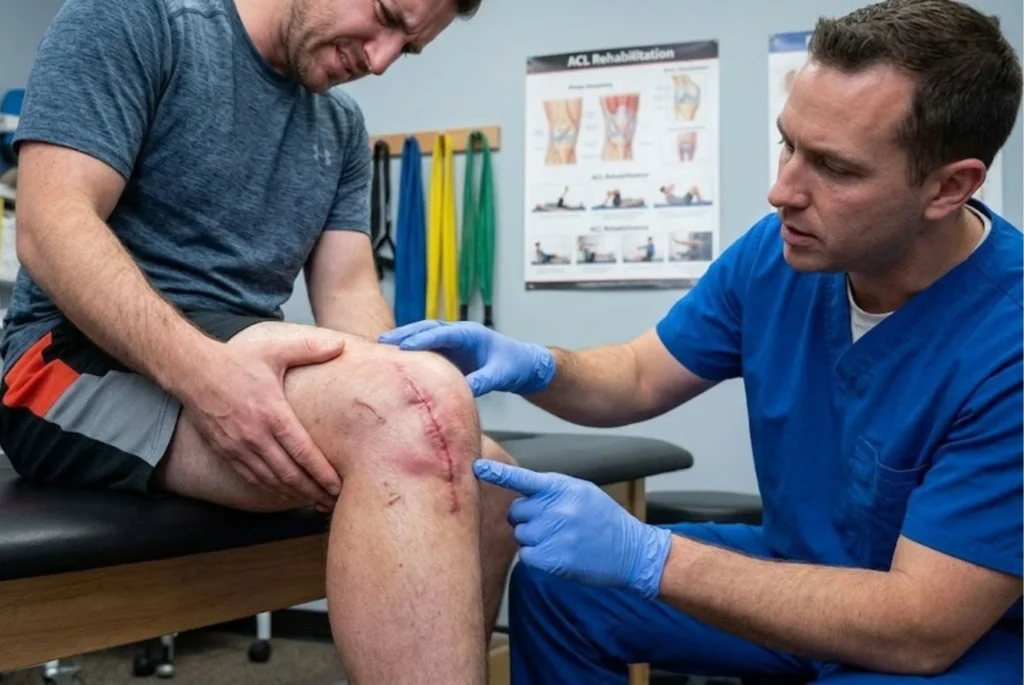
Know the signs. Act in time. Protect your new knee!
Recovering from ACL surgery can bring a mix of relief, hope, and sometimes worry. You may find yourself paying close attention to every sensation in your knee and wondering what is normal and what is not.
While most people heal smoothly, certain warning signs should never be ignored. Recognizing the bad signs after ACL surgery and knowing when to call your doctor can make a big difference in your recovery.
With Dr. Guillermo Sanchez, patients receive expert evaluation, personalized treatment, and ongoing support to address any post-surgery concerns and keep recovery on the right track.
ACL recovery takes time. Full recovery often needs 6–9 months, and for athletes, it may take up to a year. Healing happens in phases.
In the first few weeks, it is common to have:
These signs alone do not mean something is wrong. They are part of healing. With physiotherapy and proper care, they slowly improve.
Studies show that over 80–90% of ACL surgeries are successful when patients follow rehab plans properly.
That is reassuring. But it also means a small group may face complications after ACL surgery. Knowing the warning signs matters.
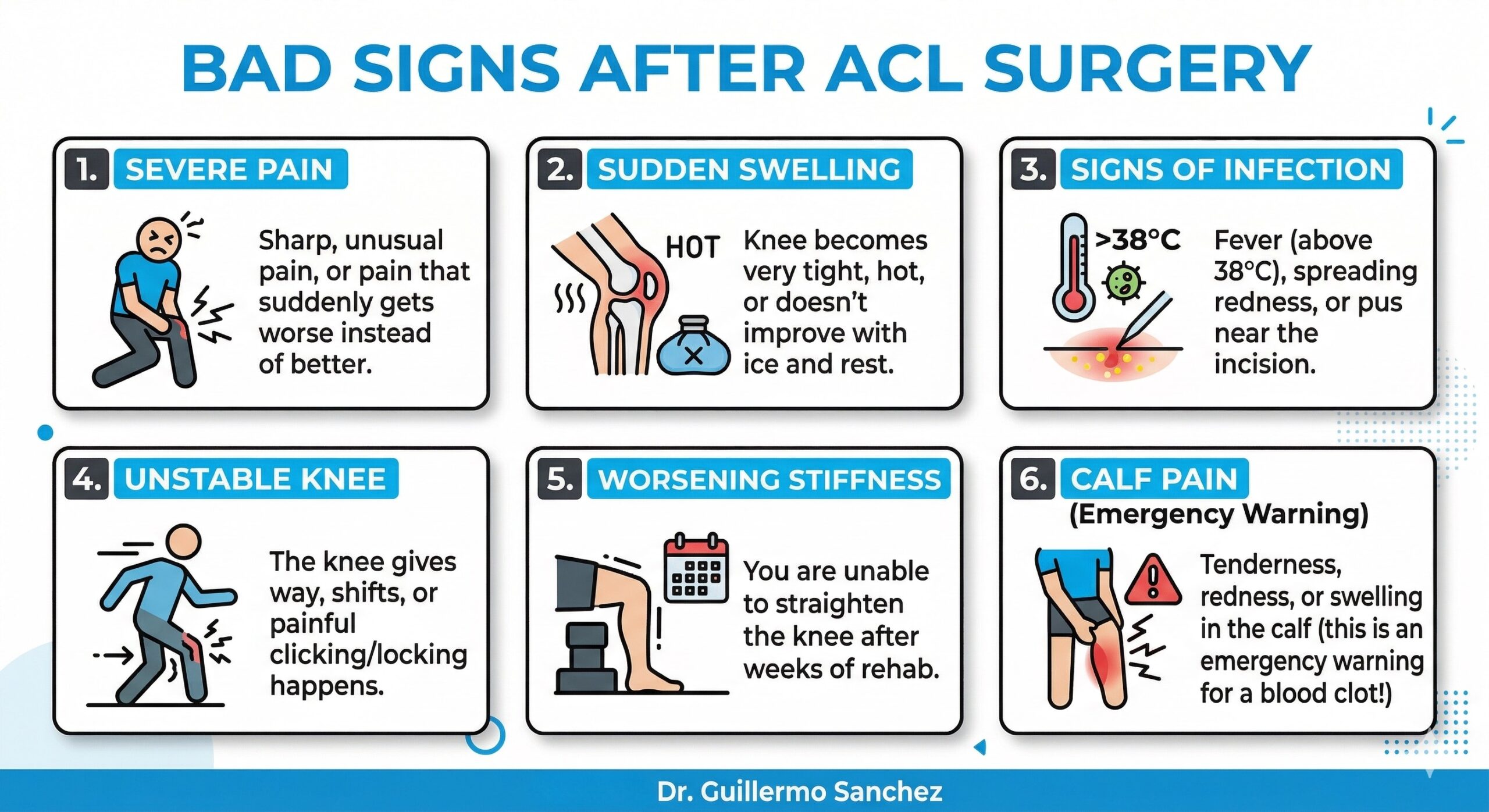
Pain is expected after surgery. But the type and timing of pain matter.
Call your doctor if:
Increasing pain can signal inflammation, graft stress, or infection after ACL surgery. Do not ignore pain that feels different from your normal recovery discomfort.
Some swelling is normal. It can last weeks. Mild swelling after exercise is also common.
But swelling may be a concern if:
Severe swelling may point to bleeding inside the joint or infection. Rarely, it could relate to a blood clot. Quick evaluation is important.
Yes. These can be early signs of infection after ACL surgery. While infections are uncommon (seen in roughly 1% or less of ACL reconstructions), they need urgent care.
Watch for:
If you notice these, contact your doctor quickly. Early antibiotics can stop serious problems.
Stiffness is part of ACL recovery. But very limited motion can be a red flag.
Seek help if:
This may indicate scar tissue build-up, sometimes called arthrofibrosis. Early physiotherapy adjustments can often fix it.
Your knee should slowly feel more stable as muscles strengthen.
Call your doctor if:
Instability can suggest graft issues or muscle weakness. It does not always mean failure, but it should be checked.
Yes. Calf pain should never be ignored.
Warning signs include:
These may point to a deep vein thrombosis (DVT). Though rare, DVT is serious and needs urgent care. Early treatment prevents complications.
Soft clicking without pain is often normal. It may come from scar tissue or joint fluid movement.
But call your doctor if:
These could signal meniscus issues or graft concerns.
Sometimes problems happen because recovery rules were not followed. The right habits protect your knee.
Dos and don’ts after ACL surgery include:
Every knee heals at its own pace.
Contact your doctor immediately if you have:
It is always better to ask early than regret later. No question is too small when it comes to your health.
Good recovery is not just about surgery. It is about guidance, rehab, and monitoring.
With Dr. Guillermo Sanchez, patients receive:
A supportive orthopedic doctor helps you stay confident throughout your healing journey.
If something doesn’t feel right after your ACL surgery, trust your instincts and do not ignore it. Small concerns can sometimes signal bigger issues, and early care can protect your results and your long-term knee health.
Reaching out for a professional opinion is a smart step, not an overreaction.
Dr. Guillermo Sanchez carefully assesses your symptoms, provides the right treatment when needed, and guides you back to a safe and confident recovery. Timely attention today can help you return to your routine with greater comfort and peace of mind.