
Living with persistent ankle pain can make even simple activities like walking, standing, or climbing stairs challenging. When conservative treatments no longer provide relief, total ankle replacement in Dubai (also called total ankle arthroplasty) may be a life-changing solution.
This advanced procedure is designed to relieve pain and preserve mobility so that you can confidently return to an active lifestyle.
Dr. Guillermo Sanchez, a highly experienced foot and ankle specialist Dubai, provides evidence-based care and precise surgical expertise for patients needing ankle joint replacement. With a patient-focused approach and the latest techniques, he ensures every treatment plan is customized to individual needs.
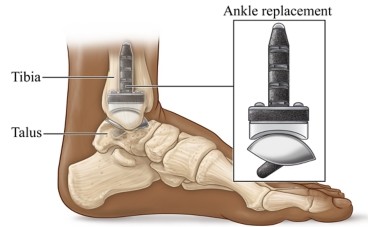
A total ankle replacement is orthopedic surgery in which the ankle joint is replaced with a metal and medical-grade plastic prosthesis. The implant mimics the natural motion of the ankle while eliminating the pain caused by arthritis or joint damage.
Unlike ankle fusion (arthrodesis), which permanently stiffens the joint, ankle replacement allows for smoother, more natural mobility, helping protect other joints in the foot from early wear and arthritis.
This surgery is generally recommended for individuals with:
Osteoarthritis (wear-and-tear), rheumatoid arthritis (autoimmune), or post-traumatic arthritis from prior injuries.
From fractures or trauma leading to advanced degeneration.
Persistent symptoms that no longer respond to medications, bracing, or injections.
When performing daily activities such as walking, climbing stairs, or standing becomes difficult.
Where other procedures no longer provide adequate relief.
If non-surgical methods have already been tried and ankle pain continues, consulting with a foot and ankle specialist in Dubai can help determine the best surgical option.
There are two primary surgical approaches:
The entire ankle joint is replaced with an artificial implant, restoring movement and reducing pain. This procedure is best for patients with arthritis or post-traumatic damage where mobility preservation is essential.
The tibia and talus are surgically fused to stop painful motion. While this relieves pain, it also eliminates ankle flexibility and can put extra stress on surrounding joints.
The choice depends on age, bone quality, activity level, and overall health.
Choosing total ankle arthroplasty offers multiple advantages:
Dramatic reduction in chronic ankle pain.
Allows a more natural walking pattern than fusion.
Helps you walk on uneven ground and use stairs more comfortably.
Reduces stress on surrounding joints, lowering the risk of secondary arthritis.
Enables you to enjoy hobbies, low-impact sports, and everyday activities.
Imaging (X-rays, CT scans) and gait analysis are performed to plan the surgery precisely.
Damaged bone and cartilage are removed. They are later replaced with metal or plastic implants that function like healthy ankles.
Some patients go home the same day; others may stay one night for observation.
Usually performed under regional anesthesia with sedation.
Physical therapy starts early to strengthen the ankle and restore range of motion.
Recovery depends on overall health and surgical complexity, but the general timeline is:
Ankle in a splint or cast, no weight-bearing, leg elevated to reduce swelling.
Transition to a removable walking boot, with gradual weight-bearing and therapy.
Structured physiotherapy, progressive weight-bearing, and strengthening exercises.
Return to most daily activities.
Full recovery with maximum improvement in mobility and function.
Avoid high-impact activities like running or jumping. Start slowly with walking, cycling, and hiking.
As with any surgery, total ankle replacement carries some risks, though modern techniques make it highly successful. Possible complications include:
The risks are minimized with careful planning, surgical precision, and undergoing surgery with an experienced and knowledgeable surgeon.
Rehabilitation is critical for a successful outcome. Initially, you may need crutches or a walker, but you will gradually transition to walking without support. Physical therapy exercises rebuild strength, restore flexibility, and retrain gait.
Long-term care involves follow-up visits to monitor implant function and prevent complications. Most patients enjoy 10+ years of pain-free mobility after ankle replacement with proper care.
Whether you require ankle pain treatment in Dubai or advanced reconstructive surgery, Dr. Sanchez offers the right balance of expertise and compassionate care.
If ankle pain limits your life, consider total ankle replacement in Dubai.
With expert evaluation, advanced surgical techniques, and guided rehabilitation, you can look forward to walking with confidence again.
Book your consultation with Dr. Guillermo Sanchez and take your first step toward restoring ankle mobility.
No. It has been performed for years, with modern implants and techniques making outcomes more predictable than ever.
Typically, Cobalt chromium for tibia and talus, and a polyethylene insert for smooth motion. Nickel-free options are available.
Yes, the goal is to preserve natural motion. Many patients report a smoother, more natural stride compared with fusion.
Depends on side and type of car. 2-4 left and 6-8 right for an automatic car. Always consult with your surgeon before beginning any activity that creates stress on the ankle joint.
Low-impact activities such as walking, swimming, cycling, and hiking are encouraged. To protect the implant, high-impact sports should be avoided.