

Carpal tunnel syndrome is among the most commonly diagnosed causes of hand pain, numbness, and tingling. Not all wrist or hand discomfort is caused by carpal tunnel syndrome. There are two other conditions that are often mistaken for carpal tunnel because they have similar symptoms, which can cause confusion and delay the right treatment.
Dr. Guillermo Sanchez often evaluates patients who are initially diagnosed with carpal tunnel syndrome but are later found to have a different underlying condition. If you’ve ever wondered, “Not carpal tunnel-what else could it be?”, you’re not alone. Many patients experience a carpal tunnel misdiagnosis, which can prolong discomfort and prevent proper care. Understanding what can mimic carpal tunnel syndrome is essential for getting the right diagnosis and treatment.
Carpal tunnel syndrome happens when the median nerve gets compressed as it moves through the carpal tunnel in the wrist. This condition typically causes:
While these symptoms are well-known, they are not exclusive to carpal tunnel syndrome. This is why many patients ask, “What can be mistaken for carpal tunnel?”
A carpal tunnel misdiagnosis often occurs because several conditions share overlapping symptoms, including nerve-related pain, tingling, and weakness. Without a thorough clinical evaluation and diagnostic testing, it can be difficult to pinpoint the exact cause.
Misdiagnosis may lead to ineffective treatments such as unnecessary splinting or even surgery, while the real condition remains untreated.
Although carpal tunnel syndrome is a common cause of hand pain and numbness, it is not always the correct diagnosis. In fact, two conditions that are often misdiagnosed as carpal tunnel syndrome are rheumatoid arthritis and tendonitis.
Many patients experiencing wrist discomfort often wonder, “Not carpal tunnel – what else could it be?” The answer lies in understanding how closely these conditions mimic one another, often leading to a misdiagnosis of carpal tunnel syndrome.
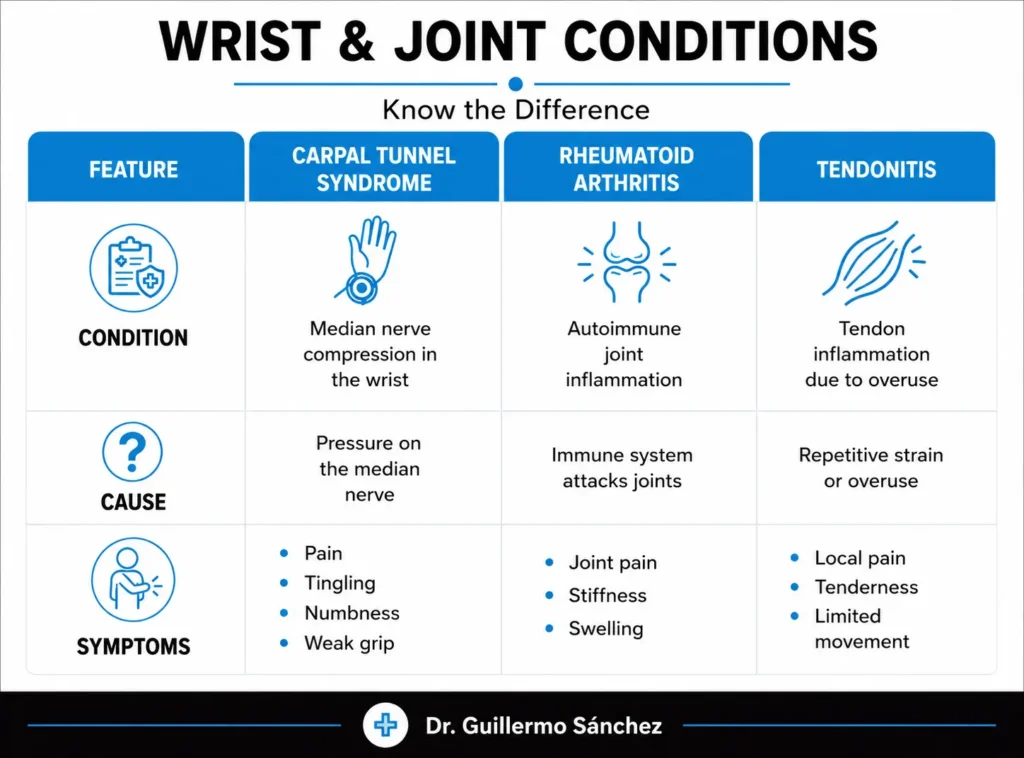
Feature | Carpal Tunnel Syndrome | Rheumatoid Arthritis | Tendonitis |
What it is | Nerve compression at the wrist affecting the median nerve | A long-term autoimmune condition that affects the joints | Inflammation of tendons caused by overuse or repetitive strain |
Cause | Pressure on the median nerve within the wrist | The immune system mistakenly attacks joint tissues | Repeated stress or overuse of a tendon |
Pain location | Wrist, palm, thumb, index, and middle fingers | Hands, wrists, and often multiple joints in the body | Localized to the affected tendon |
Common symptoms | Wrist pain, tingling, numbness, weak grip | Pain, stiffness, swelling, and joint discomfort | Pain, tenderness, and reduced movement in one area |
Shared symptoms | Wrist pain, weakness, difficulty using the hand | Wrist/hand pain, weakness, stiffness | Hand or wrist pain, weakness, difficulty with tasks |
Numbness/tingling | Very common | May occur but is not a defining feature | Usually not present |
Stiffness pattern | Often worse at night or early morning | Prominent morning stiffness that improves with movement | Local stiffness that worsens with activity |
Systemic effects | None, limited to wrist/hand | May include fatigue, fever, and weight changes | None beyond the affected area |
Pattern of involvement | Usually starts in one hand | Often affects both hands and other joints symmetrically | Confined to a specific tendon area |
Triggers for worsening | Repetitive wrist use or nighttime positioning | Disease flare-ups or morning stiffness | Repetitive movement or strain |
Clinical confusion | Symptoms can overlap with other conditions in the early stages | Often overlaps with nerve-related hand symptoms | Can closely resemble nerve-related pain conditions |
Key distinction | Nerve-related condition | Systemic inflammatory disease | Localized tendon inflammation |
Clinical note | Often requires careful evaluation to confirm diagnosis | Must be ruled out when multiple joint symptoms are present | Frequently mistaken due to similar pain patterns |
Understanding the difference between these conditions is crucial because treatment varies significantly.
Treatment for CTS is usually step-based and depends on symptom severity:
Follow-up after a few weeks helps assess improvement. If symptoms persist:
This simple procedure takes pressure off the median nerve and usually helps symptoms improve quickly.
For tendonitis, treatment focuses on reducing inflammation and allowing healing:
In specific cases like trigger finger, a minor surgical release may be performed to restore smooth tendon movement.
Rheumatoid arthritis requires a completely different approach because it is a systemic condition:
Unlike CTS, treatment focuses on controlling the immune system and preventing joint damage.
Getting the right diagnosis is key to finding the right treatment. When patients are treated for carpal tunnel syndrome without improvement, it’s important to reconsider the diagnosis.
If you’re still wondering, “not carpal tunnel – what else could it be?”, a specialist evaluation can help identify the true cause of your symptoms.
Diagnostic tools may include:
These tests help distinguish between two conditions that are often misdiagnosed as carpal tunnel syndrome and ensure the correct treatment plan is followed.
You should seek medical attention if:
Early and accurate diagnosis ensures effective treatment and faster recovery.
In cases of hand and wrist pain, especially when conditions like carpal tunnel syndrome are suspected, choosing an experienced orthopedic specialist such as Dr. Guillermo Sanchez is essential for accurate diagnosis and effective treatment. As many patients are eventually found to have two conditions that are often misdiagnosed as carpal tunnel syndrome, expert evaluation becomes even more important to avoid a carpal tunnel misdiagnosis and ensure the right care. Dr. Guillermo Sanchez offers:
He combines expertise, innovation, and personalized care to deliver effective and reliable orthopedic treatment.
Carpal tunnel syndrome is common, but it is not always the correct diagnosis. Conditions such as rheumatoid arthritis and tendonitis are two conditions that are often misdiagnosed as carpal tunnel syndrome because they share very similar symptoms.
If you are asking yourself, “what can be mistaken for carpal tunnel” or continue to experience persistent hand and wrist discomfort, it is important not to ignore these warning signs. Preventing a carpal tunnel misdiagnosis is key to getting the right treatment and achieving long-lasting relief.
Seek expert evaluation with Dr. Guillermo Sanchez to identify the true cause of your symptoms and take the next step toward effective recovery. Book your consultation today.
Rheumatoid arthritis and tendonitis are the two most common conditions. They can both cause pain, weakness, and stiffness in the hand and wrist, which often look similar to carpal tunnel symptoms.
If your symptoms seem like carpal tunnel but do not get better with usual treatment, other causes could be rheumatoid arthritis, tendonitis, or other nerve or joint problems. Seeing a doctor for a full check-up is important to find the right diagnosis.
Many conditions can mimic carpal tunnel syndrome, especially those that cause inflammation, nerve problems, or injuries from repetitive use. Rheumatoid arthritis and tendonitis are often mistaken for carpal tunnel.
Misdiagnosis happens because many hand and wrist problems have similar symptoms, such as pain, tingling, and weakness. Without a careful exam and tests, it can be hard to know the exact cause.
Carpal tunnel syndrome develops when the median nerve in your wrist becomes compressed. Rheumatoid arthritis is an autoimmune disease that affects several joints, while tendonitis is inflammation of the tendons from overuse. Each condition needs a different treatment.
See a specialist if your symptoms last, get worse, or do not get better with first treatments. Getting checked early helps avoid mistakes and makes sure you get the right care.