

Until the discomfort persists, walking becomes unsteady, or your daily routine begins to feel disturbed, a twisted ankle may appear to be a minor setback. In actuality, not every ankle sprain is the same. Knowing the ankle sprain grades, which range from minor Grade 1 injuries to more serious Grade 3 injuries, will help you understand what your body is going through and what sort of treatment it actually requires. Recovery can be more seamless, secure, and thorough with the correct direction.
Dr. Guillermo Sanchez takes a patient-first approach to treating ankle sprains, offering both non-surgical and advanced surgical solutions tailored to the severity of the injury, so you can heal with confidence and return to your normal life without fear of re-injury.
Not all sprains are the same. The severity of ligament damage determines how your injury is classified, and more importantly, how it should be treated.
Studies suggest that up to 85% of ankle injuries are sprains, and nearly 40% of people develop chronic ankle instability if not treated properly. This is why early diagnosis and the right treatment plan can make all the difference.
Your ankle is supported by strong ligaments that stabilize the joint. When the foot twists beyond its normal range, these ligaments stretch or tear.
The extent of this damage defines the grade of the sprain.
Grade | Severity | Ligament Damage | Pain Level | Mobility | Recovery Time |
Grade 1 | Mild | Slight stretching | Mild | Minimal loss | 1–3 weeks |
Grade 2 | Moderate | Partial tear | Moderate | Limited | 3–6 weeks |
Grade 3 | Severe | Complete tear | Severe | Significant instability | 8–12+ weeks |
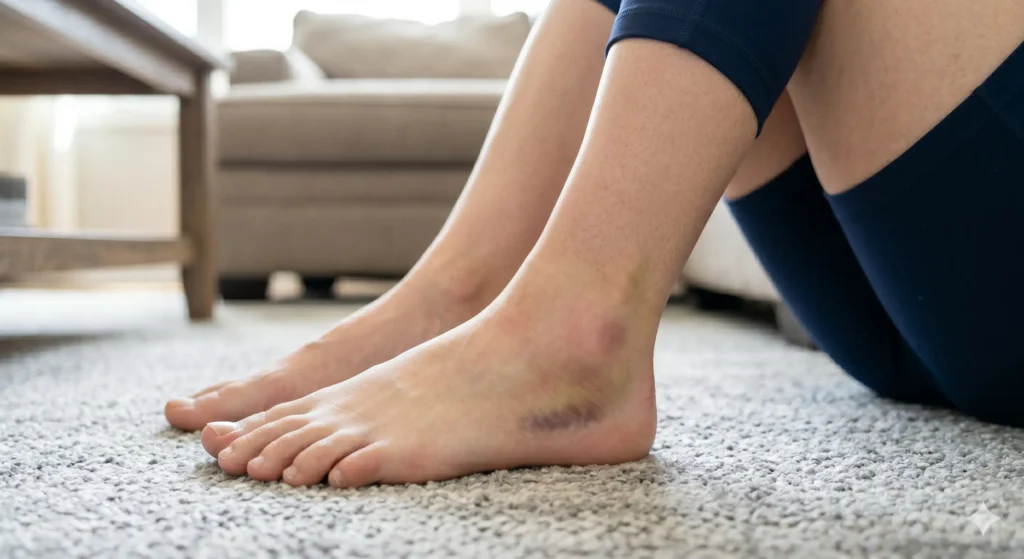
A grade 1 ankle sprain is the mildest form, but it still needs attention.
What happens?
The ligament is stretched slightly but not torn.
Symptoms
Grade 1 ankle sprain treatment
Treatment is simple but important:
Grade 1 ankle sprain recovery time
Most people recover within 1 to 3 weeks, especially with proper care.
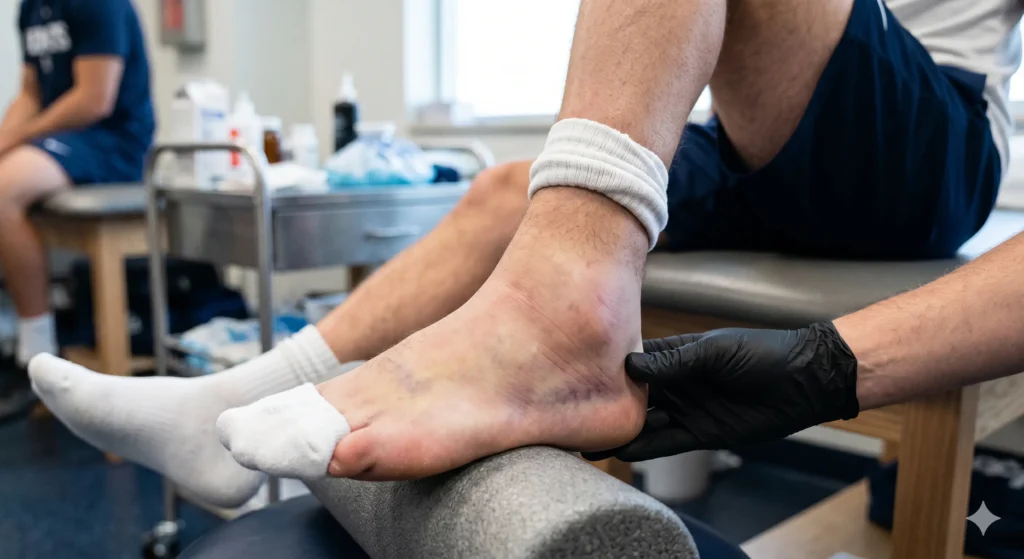
A grade 2 ankle sprain exhibits more significant damage. It hence needs structured care.
What happens?
The ligament is partially torn, leading to instability.
Symptoms
Grade 2 ankle sprain treatment
A more guided approach is needed:
Grade 2 ankle sprain recovery time
Recovery typically takes 3 to 6 weeks, though some cases may take longer depending on activity levels.
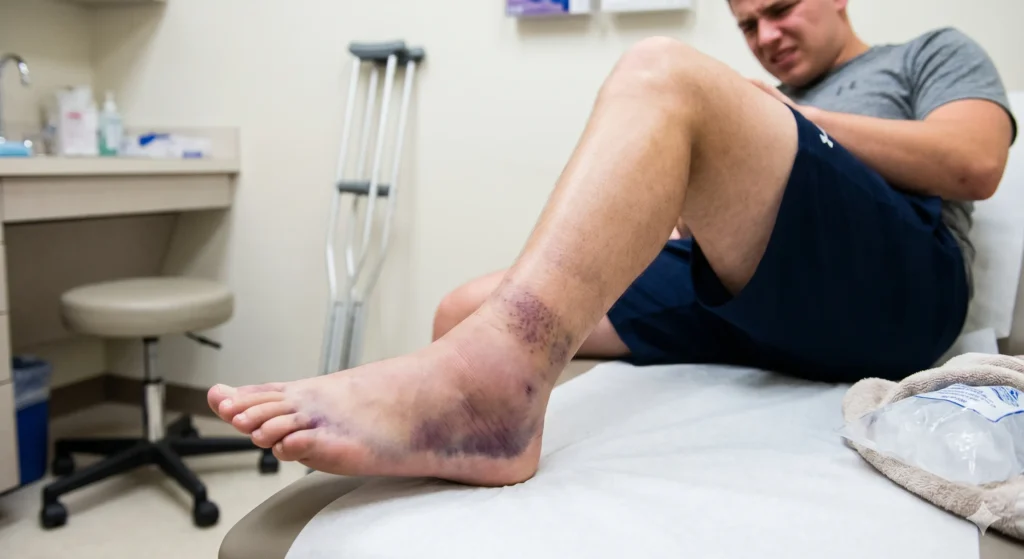
A grade 3 ankle sprain is the most serious type and needs expert care.
What is a grade 3 ankle sprain?
It is a complete tear of the ligament, resulting in significant joint instability.
Symptoms
Grade 3 ankle sprain treatment
Treatment depends on the patient’s lifestyle and severity:
Non-surgical options
Surgical options
In some cases, surgery is recommended to repair or reconstruct the ligament, especially for:
Grade 3 ankle sprain recovery time
Recovery can take 8 to 12 weeks or longer, especially if surgery is involved.
Feature | Grade 1 | Grade 2 | Grade 3 |
Swelling | Mild | Moderate | Severe |
Bruising | Minimal | Visible | Extensive |
Pain | Mild | Moderate | Severe |
Stability | Normal | Slightly unstable | Very unstable |
Walking Ability | Mostly normal | Difficult | Often impossible |
Dr. Guillermo Sanchez believes that no two ankle injuries are the same.
Treatment is always tailored to:
Non-surgical treatment options
Most ankle sprains heal without surgery when managed properly.
This helps control inflammation and pain in the first 48–72 hours.
Ankle braces or boots provide stability and prevent further injury, especially in grade 2 ankle sprain treatment and mild grade 3 ankle sprain treatment cases.
Rehabilitation is crucial.
A structured program includes:
What does research say? |
Anti-inflammatory medications help manage pain and swelling.
In selected cases, therapies such as PRP (Platelet-Rich Plasma) may be used to enhance healing.
Surgery is usually considered for grade 3 ankle sprain cases or chronic instability.
When is surgery needed?
Dr. Guillermo Sanchez carefully evaluates each case and recommends the most suitable procedure based on the extent of ligament damage, level of instability, and the patient’s lifestyle needs.
Ligament repair is often considered when the torn ligament ends are still healthy enough to be reattached. In this procedure, Dr. Sanchez precisely sutures the damaged ligament back to its original position, restoring the natural structure of the ankle.
This approach helps:
It is commonly recommended for patients with acute injuries, especially when treated early. With proper rehabilitation, many patients regain strong and reliable ankle function.
In cases in which the ligament is too damaged or weakened to be repaired, reconstruction becomes necessary. This involves rebuilding the ligament using a graft, which may be taken from the patient’s own tissue or from a donor source.
Dr. Guillermo performs this procedure with a focus on durability and long-term stability. The graft is carefully positioned to mimic the original ligament’s function, allowing the ankle to regain strength and balance.
Ligament reconstruction is particularly beneficial for:
This procedure provides a more robust solution when the original ligament can no longer perform its role effectively.
Arthroscopic surgery is a minimally invasive technique that allows Dr. Guillermo to treat ankle issues with high precision. Using a small camera (scope) and specialized instruments inserted through tiny incisions, he can visualize and address problems in the joint without the need for large cuts.
This procedure is often used to:
Due to it’s less invasive nature, arthroscopy typically results in:
Stage | Grade 1 | Grade 2 | Grade 3 |
Initial Healing | 1 week | 1–2 weeks | 2–3 weeks |
Rehab Phase | 1–2 weeks | 2–4 weeks | 6–8 weeks |
Return to Activity | 2–3 weeks | 4–6 weeks | 10–12+ weeks |
Many people underestimate ankle injuries.
However, untreated sprains can lead to:
What do studies reveal? |
Seek medical attention if you experience:
Early evaluation ensures the right diagnosis and prevents complications.
Dr. Guillermo Sanchez focuses on more than just healing the injury; he focuses on restoring confidence, mobility, and quality of life.
From accurate diagnosis to advanced treatment and guided rehabilitation, every step is designed to help patients recover fully and return to their daily activities safely.
An ankle sprain may seem minor at first, but the way you treat it determines your long-term recovery. Whether it’s a grade 1 ankle sprain, a grade 2 ankle sprain, or a more serious grade 3 ankle sprain, timely and appropriate care is essential.
If you’re experiencing ankle pain, instability, or difficulty walking, don’t ignore it.
Consult Dr. Guillermo Sanchez for a personalized treatment plan designed just for you.
Strong ankles mean a stronger, more confident you – start your recovery now.