
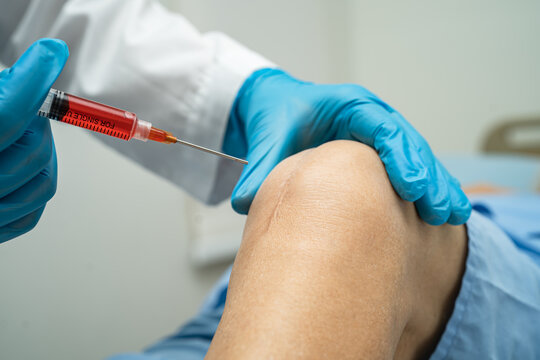
Joint pain and injuries can put life on pause, whether it’s an athlete sidelined by a torn ligament or someone struggling with daily stiffness and inflammation. In recent years, Platelet-Rich Plasma (PRP) therapy has emerged as one of the most promising breakthroughs in regenerative medicine, offering the body a way to heal itself naturally.
By using the patient’s own blood to stimulate tissue repair and reduce inflammation, PRP is transforming how doctors approach joint health and recovery.
At the forefront of this innovation, Dr. Guillermo Sanchez offers advanced PRP treatments tailored to help patients regain mobility, recover faster, and return to an active, pain-free lifestyle without the need for invasive surgery.
PRP, or Platelet-Rich Plasma, is derived from your own blood. A small sample is collected and then spun in a centrifuge to isolate the portion rich in platelets. These platelets release powerful growth factors that encourage tissue repair and help reduce inflammation. Simply put, PRP harnesses your body’s natural healing potential to restore damaged tissues.
While PRP isn’t a miraculous cure-all, it has proven to be highly effective in managing and promoting healing for various orthopedic and musculoskeletal issues, including:
such as tennis elbow, Achilles tendinitis, and jumper’s knee (patellar tendinitis).
including strains or tears in the hamstring, calf, or groin muscles.
particularly beneficial for reducing pain and improving mobility in the knee.
such as mild to moderate sprains in the knee or ankle.
If non-surgical methods have already been tried and ankle pain continues, consulting with a foot and ankle specialist in Dubai can help determine the best surgical option.
The treatment is straightforward and performed right in the clinic:
Patients might feel mild discomfort or a brief sting during the injection, but anesthesia is rarely necessary. In many cases, two to three sessions spaced a few weeks apart yield the best results. Since the material comes from your own body, side effects are minimal, typically just mild soreness or temporary swelling around the injection site.
From professional athletes to everyday individuals, PRP in musculoskeletal injuries is redefining how people recover. Instead of merely masking pain, PRP for joint works to repair the root cause of the problem.
Musculoskeletal injuries, such as tendonitis, ligament tears, and joint degeneration, often heal slowly due to limited blood flow in those tissues. PRP changes that by delivering growth factors directly to the injury site, enhancing the body’s ability to rebuild stronger, healthier tissue.
Clinical studies have shown encouraging outcomes: many patients experience improved joint stability, better flexibility, and less pain within weeks of treatment. For athletes, this means faster recovery without the downtime and risks associated with surgery.
The knee is one of the most highly affected joints, especially among runners, gym enthusiasts, and older adults. Conditions like osteoarthritis, meniscus injuries, and chronic inflammation often lead to stiffness and pain.
PRP treatment for the knee has emerged as a game-changer in orthopedic care. When injected into the knee joint, PRP promotes cartilage repair, reduces inflammation, and helps restore mobility. Unlike cortisone injections that provide temporary relief, PRP addresses the underlying damage.
Patients often report decreased pain, improved range of motion, and enhanced quality of life within just a few sessions. And since it’s derived from the patient’s own blood, there’s minimal risk of side effects or rejection.
For many, PRP orthopedic therapy offers a bridge between conservative management and surgery, a natural alternative for those seeking lasting improvement without invasive intervention.
Joint injuries don’t just affect the knees; they can impact shoulders, hips, elbows, and even smaller joints like the wrists and ankles. PRP joint injections are highly versatile, capable of targeting inflammation and tissue degeneration in nearly any joint of the body.
The growth factors released from PRP activate the repair process within cartilage, tendons, and ligaments, encouraging regeneration from the inside out. Whether it’s rotator cuff pain, tennis elbow, or early arthritis, PRP can stimulate healing where conventional treatments often fail.
This regenerative approach doesn’t just relieve pain, it helps restore strength, flexibility, and function, allowing patients to return to active lifestyles with confidence.
Muscle tears are among the most frustrating injuries, especially for those who lead active lives. Traditional recovery methods involve rest, physiotherapy, and time, but time is often the biggest challenge.
PRP for muscle tears accelerates this process by supplying concentrated healing factors directly to the damaged muscle fibers. The result? Quicker repair, reduced inflammation, and minimized scar tissue formation.
Athletes in high-impact sports are increasingly turning to PRP to get back on the field faster, and with stronger, more resilient muscles. Even for non-athletes, this therapy can dramatically shorten recovery time and reduce the risk of chronic pain or reinjury.
Improvements with PRP don’t happen overnight. Most patients begin to notice gradual relief and better movement within three to six weeks after treatment. The best outcomes are typically seen in individuals with early joint degeneration or chronic tendon issues that haven’t improved with physiotherapy.
However, it’s important to remember that PRP complements, not replaces, rehabilitation exercises, muscle strengthening, and a healthy lifestyle. It works as a supportive therapy within a broader recovery plan.
Orthopedic PRP therapy represents a significant leap forward in regenerative medicine. Instead of focusing on symptom relief, it taps into the body’s innate potential to heal itself.
Here’s why PRP is becoming a cornerstone of PRP orthopedic care:
Orthopedic specialists are now combining PRP with physiotherapy and other conservative methods to enhance outcomes, offering patients a truly holistic approach to joint restoration.
The arena of regenerative medicine is evolving rapidly. New PRP formulations, such as fibrin-rich PRP, blends with hyaluronic acid, and highly concentrated solutions, are being explored to enhance outcomes.
As research advances, we can expect more standardized methods, consistent results, and even greater potential for PRP to transform how we treat joint and soft tissue conditions.
Moreover, as technology advances, PRP formulations are becoming even more refined, allowing for higher platelet concentrations and more precise targeting. This continual improvement suggests that PRP for joints isn’t just a passing trend; it’s shaping up to be a cornerstone of future orthopedic and sports medicine practices.
And perhaps the most appealing part is its simplicity: no artificial substances, no foreign implants, just your body healing itself, better and faster.
At the forefront of this regenerative revolution, Dr. Guillermo Sanchez offers specialized PRP orthopedic therapy designed to restore function, relieve pain, and enhance long-term joint health. With extensive expertise in advanced orthopedic techniques, he tailors each treatment to the patient’s unique condition, whether it’s joint degeneration, ligament injuries, or chronic inflammation.
By combining evidence-based medicine with cutting-edge regenerative approaches, Dr. Sanchez helps patients move beyond temporary relief toward true healing. His patient-centered philosophy ensures comfort, safety, and optimal outcomes, helping people return to the activities they love with renewed strength and confidence.
PRP isn’t just a trend or medical buzzword; it’s a proven therapeutic option supported by a growing body of research. When used appropriately and for the right candidates, it can play a meaningful role in healing specific injuries.
Like any medical approach, its success depends on proper diagnosis and integration into a comprehensive rehabilitation plan. For those dealing with persistent tendon pain, a knee injury that limits movement, or recurring muscle tears, PRP could be an important part of the path to lasting recovery.
For anyone seeking a safe and natural solution for joint pain or injury recovery, PRP treatment for joints offers new hope. And under the expert guidance of specialists like Dr. Guillermo Sanchez, the future of joint health looks regenerative, resilient, and remarkably bright.
You may feel a brief sting or mild discomfort during and shortly after the injection, but most patients tolerate it very well.
Typically, one to three sessions are advisable, spaced a few weeks apart. The exact number depends on the nature of your injury and how your body responds to the treatment.
Most people begin to experience positive changes between three to six weeks after their first injection as the healing process progresses.
Since PRP uses your own blood, side effects are rare and minimal. You might notice slight swelling or tenderness at the injection site for a short period.
Coverage varies depending on your insurance provider and plan. In many cases, PRP therapy is considered a self-pay or private treatment.
It’s best to rest for the first 24–48 hours following treatment. After that, you can gradually return to physical activity, ideally under the guidance of your doctor and a physiotherapist.